
Tour overview
The Q'eswachaka Bridge Full-Day Tour is our full-day excursion from Cusco to the last Inca suspension bridge still in use: a bridge about 28 meters long, woven from plant fiber (q'oya or ichu) over a canyon of the Apurímac River, in the district of Quehue, Canas province, at about 3,700 m a.s.l. Every year, in the second week of June, the communities of Huinchiri, Chaupibanda, Choccayhua, and Ccollana Quehue renew it with techniques and rituals of Inca origin, a tradition inscribed by UNESCO in 2013 as Intangible Cultural Heritage of Humanity. We pick you up before dawn at your hotel, have breakfast on the way, travel the Four Lakes circuit (Pomacanchi, Acopia, Asnaqocha, and Pampamarca), pass through Tungasuca, the land of Túpac Amaru II, and the small Pabellones volcano, reach the bridge in the late morning to see it and, if you wish, cross it, have lunch, and, on the way back, visit the bridges of Checacupe before arriving in Cusco in the afternoon. We include tourist transport, a professional guide, the bridge entrance fee, breakfast, and lunch.
-
Best time to travel Between April and October (dry season)
-
Maximum altitude 3,750 m a.s.l. (Pampamarca lake)
-
Physical difficulty Short walks; zigzag path to the bridge; altitude
-
Minimum number of passengers 2 adults
-
Maximum number of passengers 10 adults
-
Booking lead time 1 day in advance
Overview
- Approx. 4:00 – 5:00 a.m. – Pickup in Cusco: we collect you at your hotel in the historic center and head south of Cusco.
- Approx. 6:00 – 7:00 a.m. – Breakfast on the way: breakfast at a restaurant along the road, in the South Valley.
- Mid-morning – Four Lakes circuit: stops at Pomacanchi, Acopia, Asnaqocha, and Pampamarca lakes.
- Tungasuca and the Pabellones volcano: the town and house of Túpac Amaru II, and the small Pabellones volcano.
- Approx. 11:00 a.m. – Q'eswachaka Bridge: descent into the Apurímac canyon, guided visit, and optional crossing of the bridge.
- Approx. 1:00 p.m. – Lunch: lunch at a restaurant in the area.
- Afternoon – Checacupe bridges: stop at the three stacked bridges (Inca, colonial, and republican).
- Approx. 5:00 – 5:30 p.m. – Arrival in Cusco: the service ends in the city center.
Itinerary
Approx. 4:00 – 5:00 a.m. – Pickup in Cusco and breakfast on the way
We pick you up very early at your hotel in the historic center of Cusco; we confirm the exact time the day before, usually between 4:00 and 5:00 a.m. We board our tourist transport and travel south of Cusco on the Urcos road, passing small towns of the South Valley as dawn breaks over the Andes.
After about two hours on the road we stop for breakfast at a restaurant along the way and to use the restrooms. With renewed energy we continue toward Canas province, leaving the valley to climb onto the high plateau.
Mid-morning – Four Lakes circuit, Tungasuca, and Pabellones
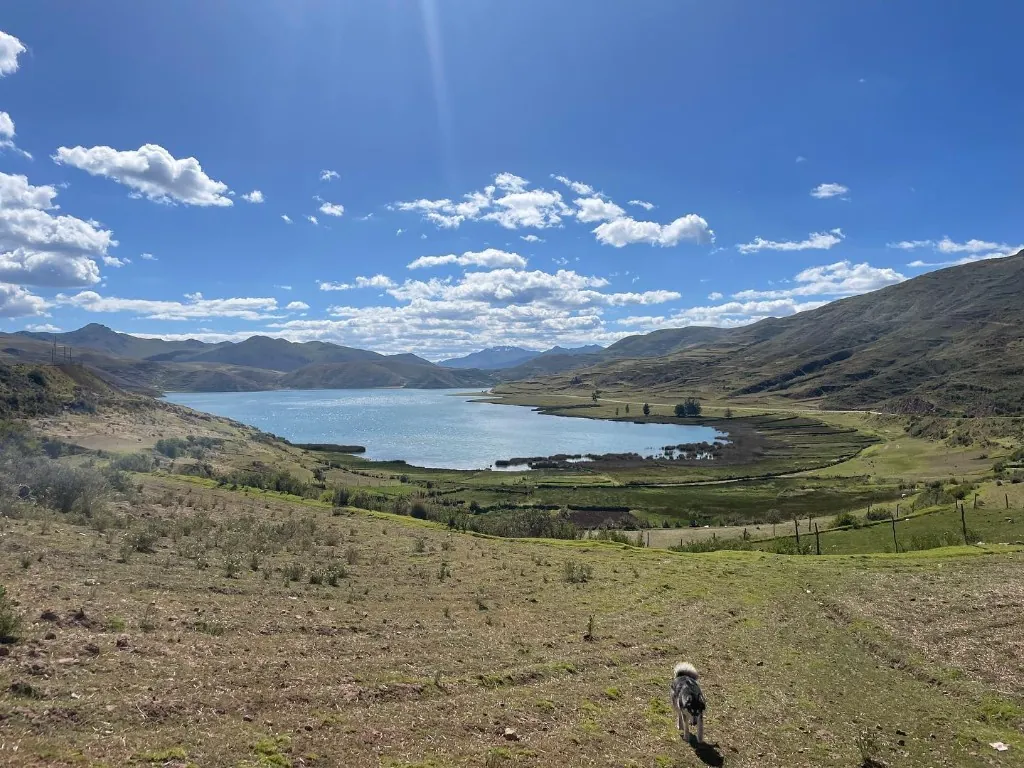
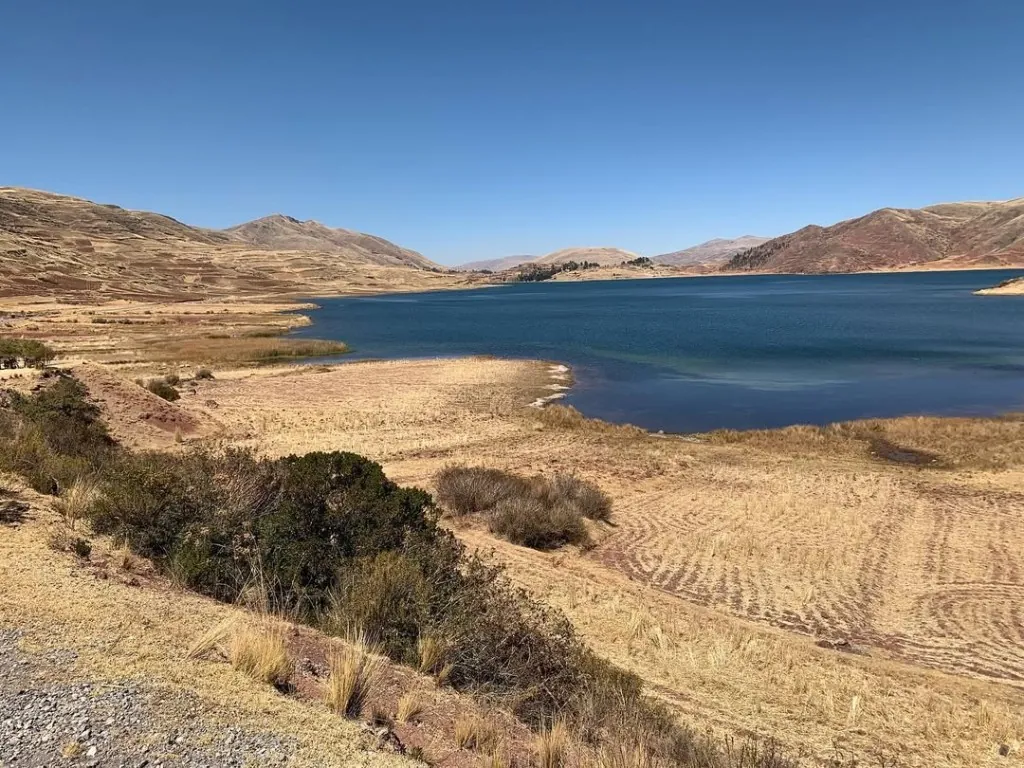
Our first major stop is the Four Lakes circuit. We begin at Pomacanchi lake, the largest, known for its trout fishing; we continue to Acopia lake, quieter, where wild ducks and other birds are often seen; then to Asnaqocha and, finally, to Pampamarca, the highest on the circuit (around 3,750 m a.s.l.), surrounded by reed beds and a resting place for birds, including flamingos at certain times of year. At each lake our guide explains the flora, the fauna, and community life, and you have time for photos.
Along the route we pass through Tungasuca, a town linked to Túpac Amaru II, the leader of the great Andean rebellion, where his historic house is preserved. We also stop in front of the curious Pabellones volcano, a tiny volcanic cone only a few meters across that is presented as one of the smallest in the world. We then continue through the district of Yanaoca toward Quehue, the district where the bridge stands.
Approx. 11:00 a.m. – Inca Q'eswachaka Bridge
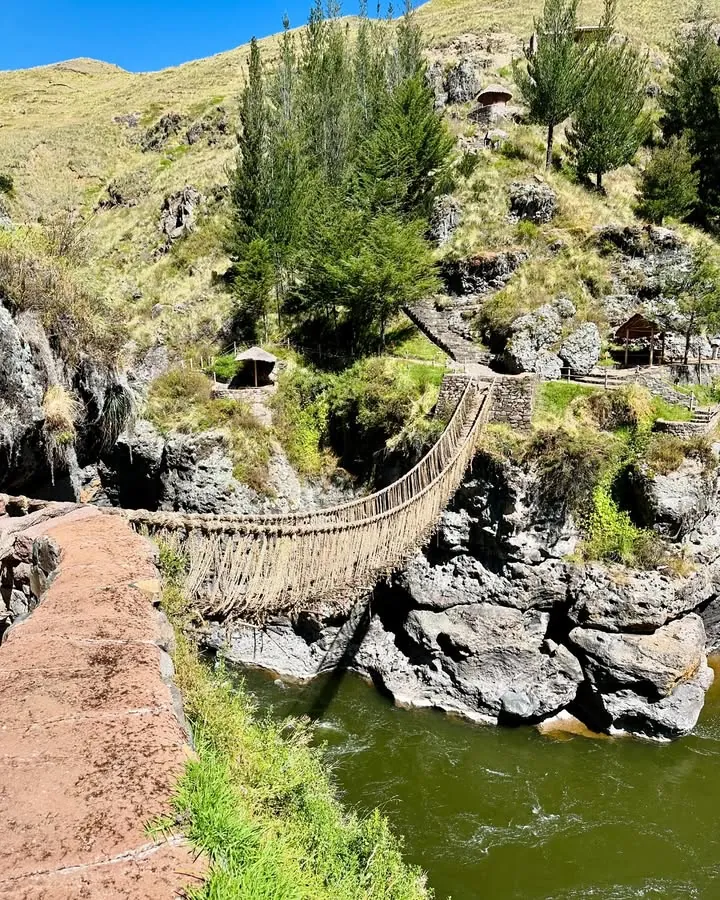
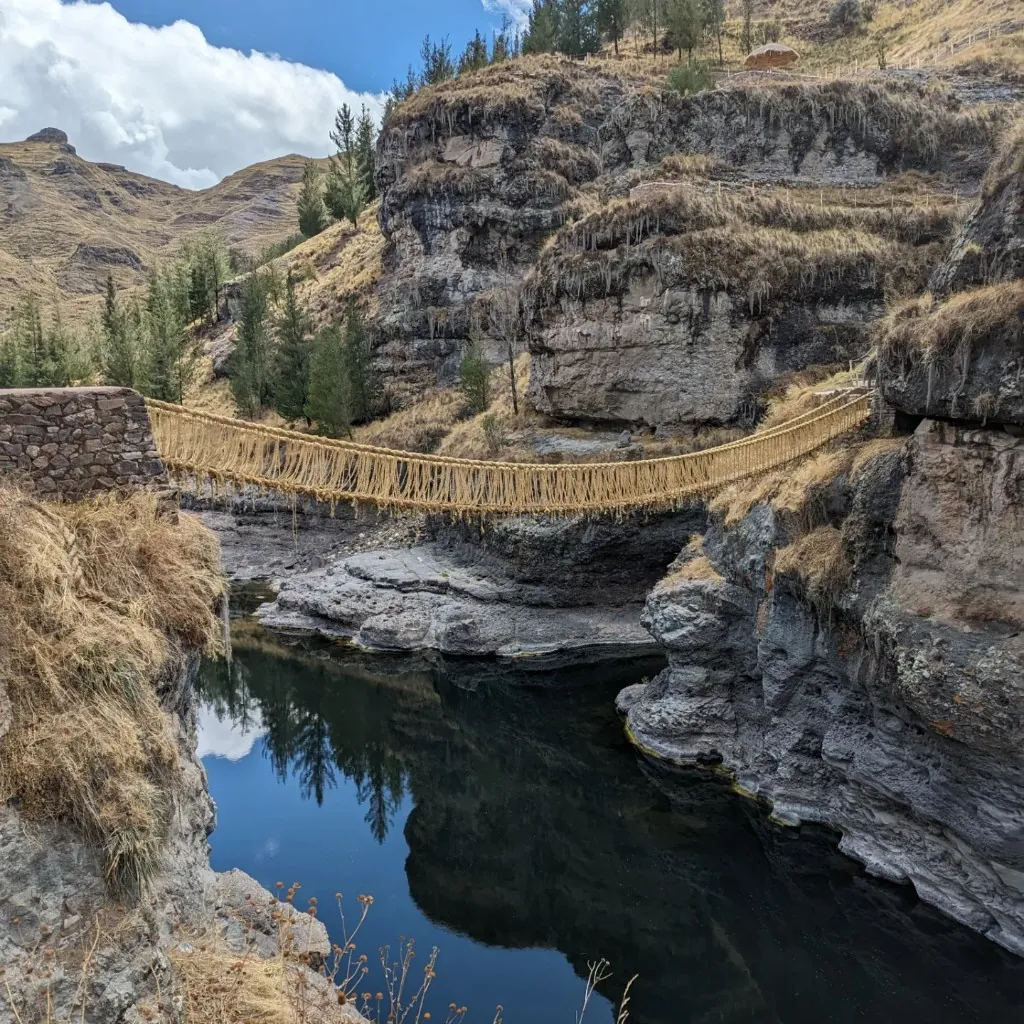
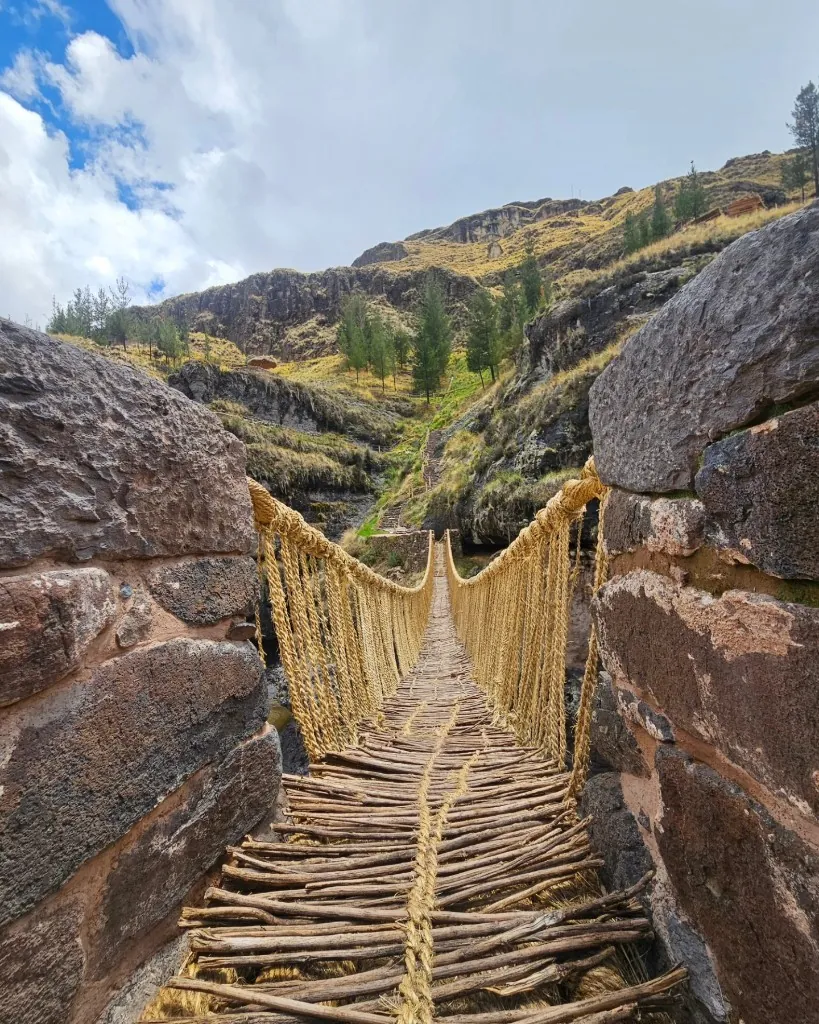
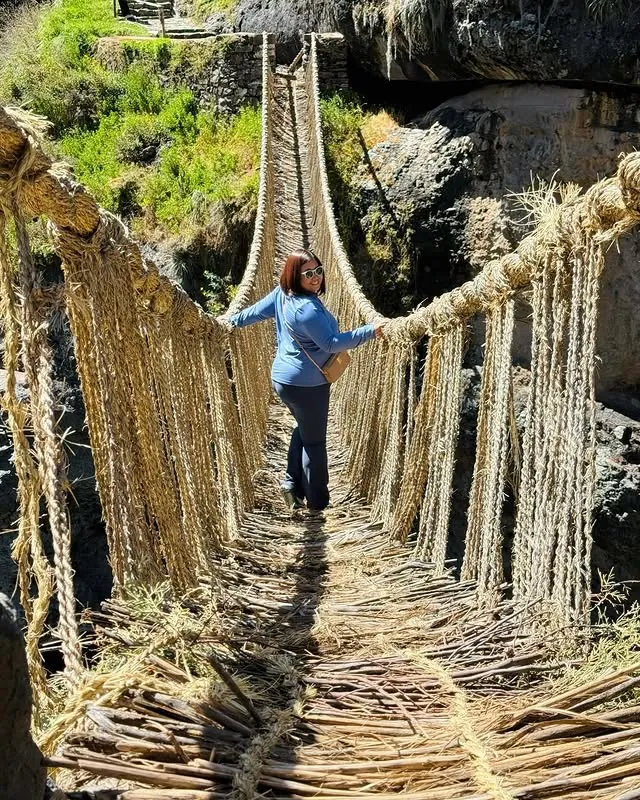
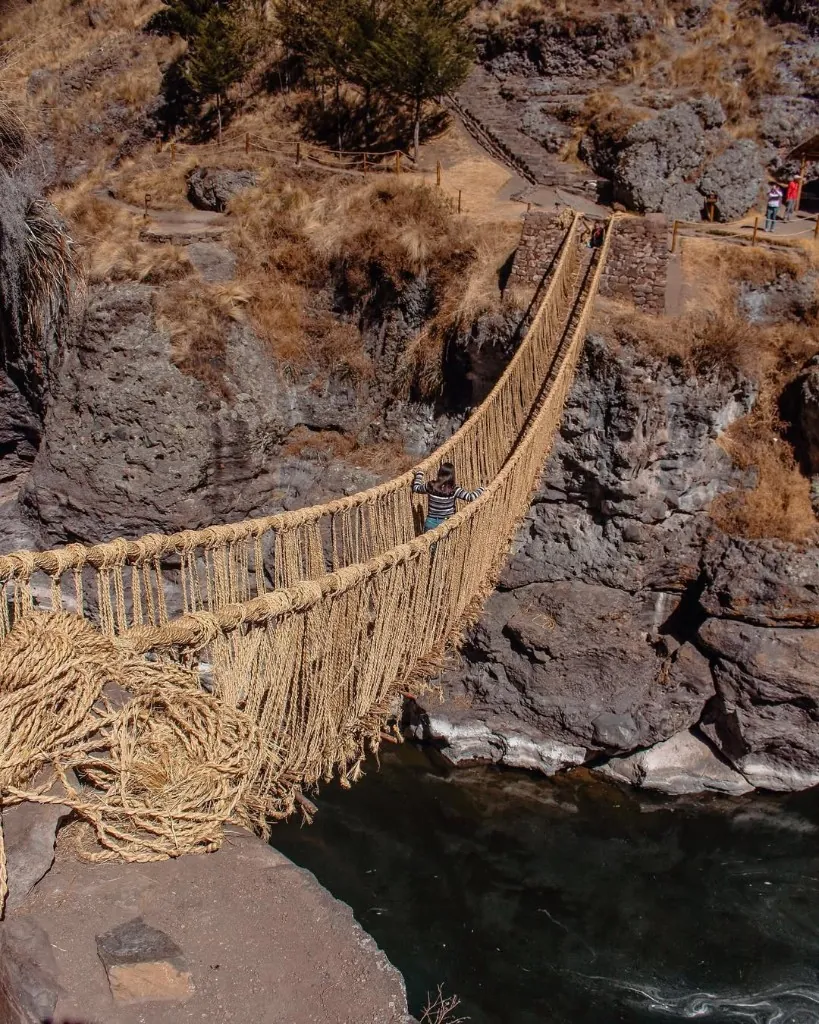
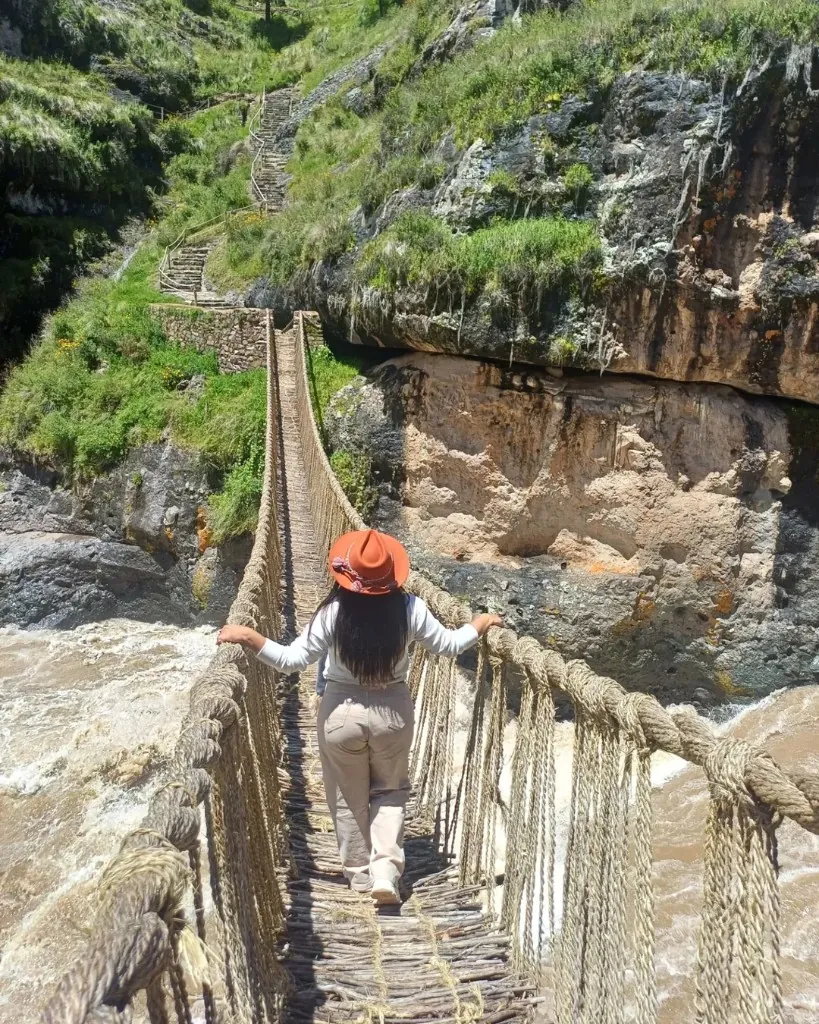
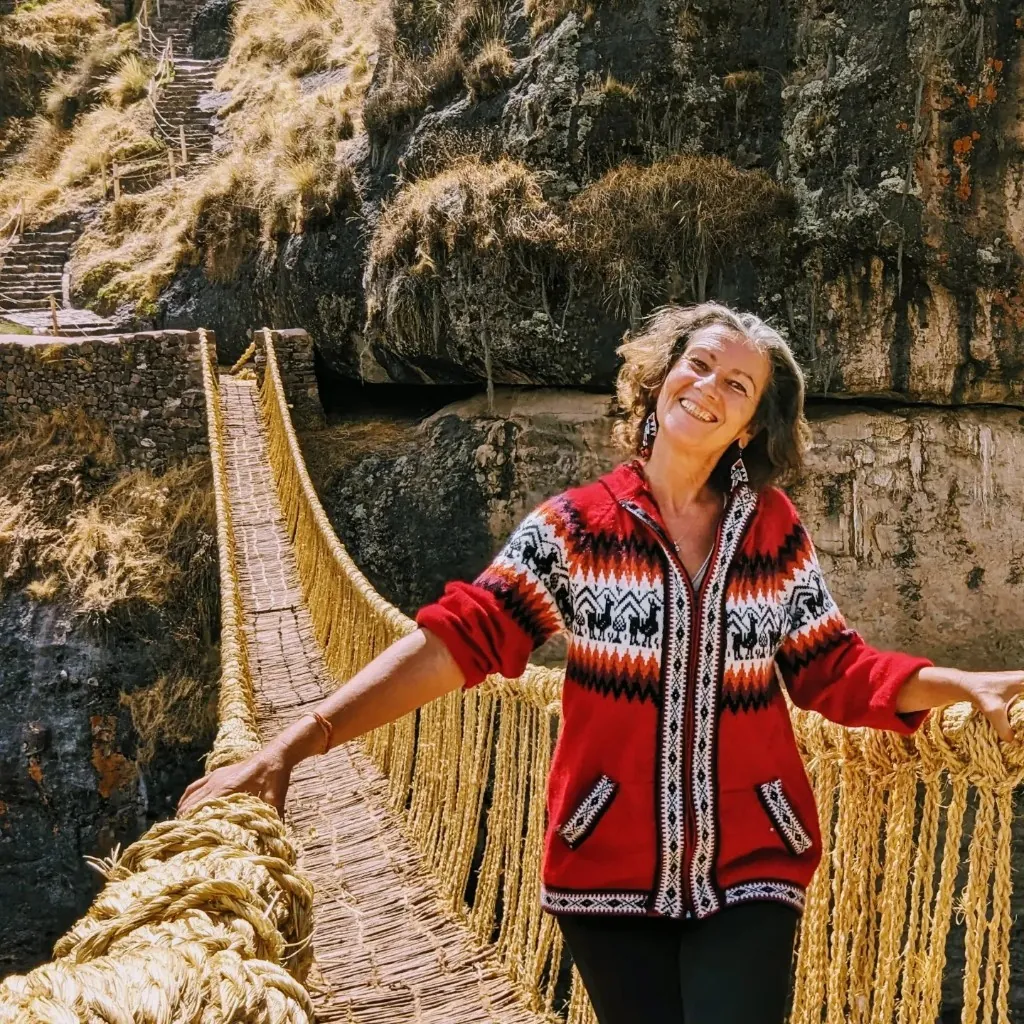
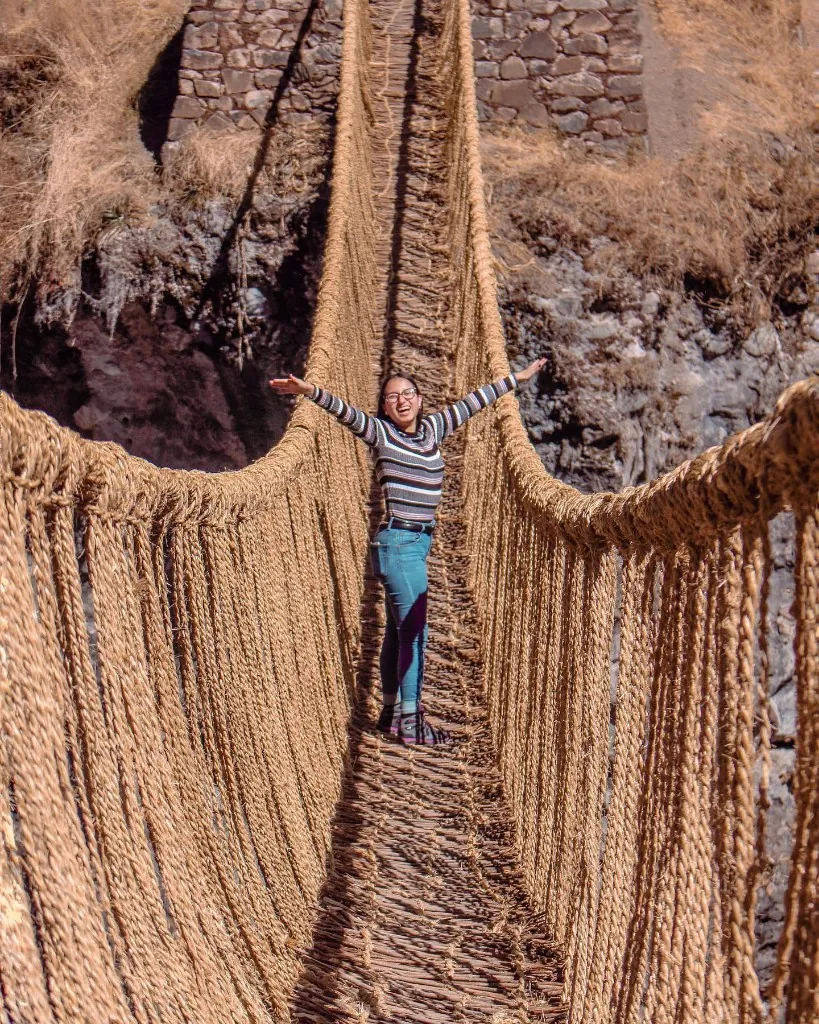
From the road we descend a zigzag path into the canyon of the Apurímac River, where the Q'eswachaka Bridge appears, suspended at about 3,700 m a.s.l. It measures about 28 meters long and 1.20 meters wide, is anchored to ancient stone bases on each side of the gorge, and is part of the Inca road network, the Qhapaq Ñan. During the guided visit, about one hour to an hour and a half, our guide tells you how it is built and why it is considered the last living Inca bridge.
Every year, in the second week of June, the four Quechua farming communities of Quehue renew it in three days of communal work: families braid grass ropes about 70 meters long, two master builders direct the braiding of the six great ropes that hold the bridge, and the weaving advances from both ends, accompanied by offerings to the Pachamama and the apus and by a final festival. If you feel up to it, you can cross the bridge from one side to the other following the guide’s instructions; it moves and sways, so you can also enjoy it and photograph it from the bank.
Approx. 1:00 p.m. – Lunch
When the bridge visit ends, we climb back to our transport and go to lunch at a restaurant in the area, where you enjoy typical food and rest after the morning on the high plateau.
After lunch, around 2:00 p.m., we start the return drive toward Cusco.
Afternoon – Checacupe bridges and return to Cusco
On the way back we stop in Checacupe, over the Pitumarca River, where three bridges from different eras stand together: the Inca bridge, the colonial bridge of stone and lime, and the republican bridge with a structure of iron rails. It is the perfect close for comparing Andean engineering with colonial and modern work after seeing Q'eswachaka.
We continue the drive and reach the city of Cusco at about 5:00 to 5:30 p.m., where we end the service in the city center.
Recommendations
General
- Wear warm clothing in layers (fleece, a windbreaker or waterproof jacket), a hat, and gloves: dawn and the high plateau are cold and windy.
- Protect yourself from the sun with sunscreen, sunglasses, and a hat.
- Wear comfortable shoes with a good sole for the zigzag path to the bridge.
- Bring water, snacks, toilet paper, and hand gel; facilities on the route are basic.
- Bring your camera, extra batteries, and some cash for personal purchases.
- If you cross the bridge, always follow the guide’s instructions; if you have vertigo, enjoy it from the bank.
- Between November and March (the rainy season) the paths can be slippery; bring a rain poncho.
Acclimatization
- We recommend spending at least 1 or 2 days in Cusco before this tour to acclimatize, because the route runs around 3,700 m a.s.l.
- Drink coca tea, stay hydrated, and avoid heavy meals the night before.
- If you have any health issue, tell our agency before the tour; our guide carries a first-aid kit and oxygen for emergencies.
Inclusions
Included
- Pickup from your hotel in the historic center of Cusco.
- Briefing with the tour information the day before.
- Tourist transport out and back for the whole route.
- Professional guide (Spanish / English).
- Entrance to the Q'eswachaka Bridge.
- First-aid kit and oxygen for emergencies.
- Breakfast at a restaurant on the way.
- Lunch at a restaurant in the area.
Not included
- Dinner.
- Meals and drinks not mentioned.
- Tips.
- Extra or personal expenses.
- Travel insurance.
- Pickup outside the historic center of Cusco (arrange it with our agency).
Frequently asked questions
What is the Q'eswachaka Bridge?
It is a suspension bridge about 28 meters long, woven from plant fiber over a canyon of the Apurímac River, in the district of Quehue, Canas province. It is renewed every year with Inca techniques, and in 2013 UNESCO inscribed the knowledge, techniques, and rituals of its renewal as Intangible Cultural Heritage of Humanity.
How long is the tour?
It is a full day of about 12 hours: we pick you up between 4:00 and 5:00 a.m. and return to Cusco at about 5:00 to 5:30 p.m.
Can I cross the bridge?
Yes. Crossing is optional. The bridge moves and sways, so we cross it following the guide’s instructions. If you feel vertigo, you can enjoy it and photograph it from the bank.
When is the bridge renewed?
Every year in the second week of June. The renewal lasts three days and is carried out by the communities of Huinchiri, Chaupibanda, Choccayhua, and Ccollana Quehue, with ritual ceremonies and a festival at the end.
How high do we go?
The bridge is at about 3,700 m a.s.l. and Pampamarca lake, the highest on the circuit, at about 3,750 m a.s.l.
Is there a lot of walking?
No. There are short walks at each stop and the descent and climb on the zigzag path between the road and the bridge. The main demand is the altitude.
Which meals are included?
We include breakfast on the way and lunch at a restaurant in the area. Dinner is not included.