

Tour overview
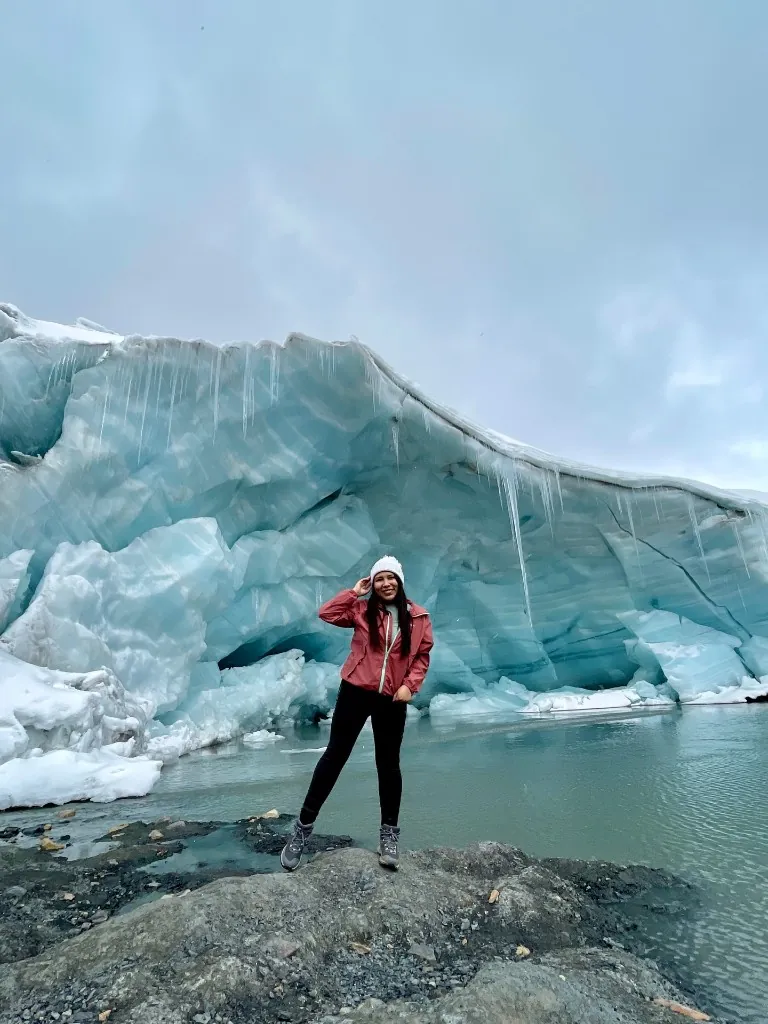
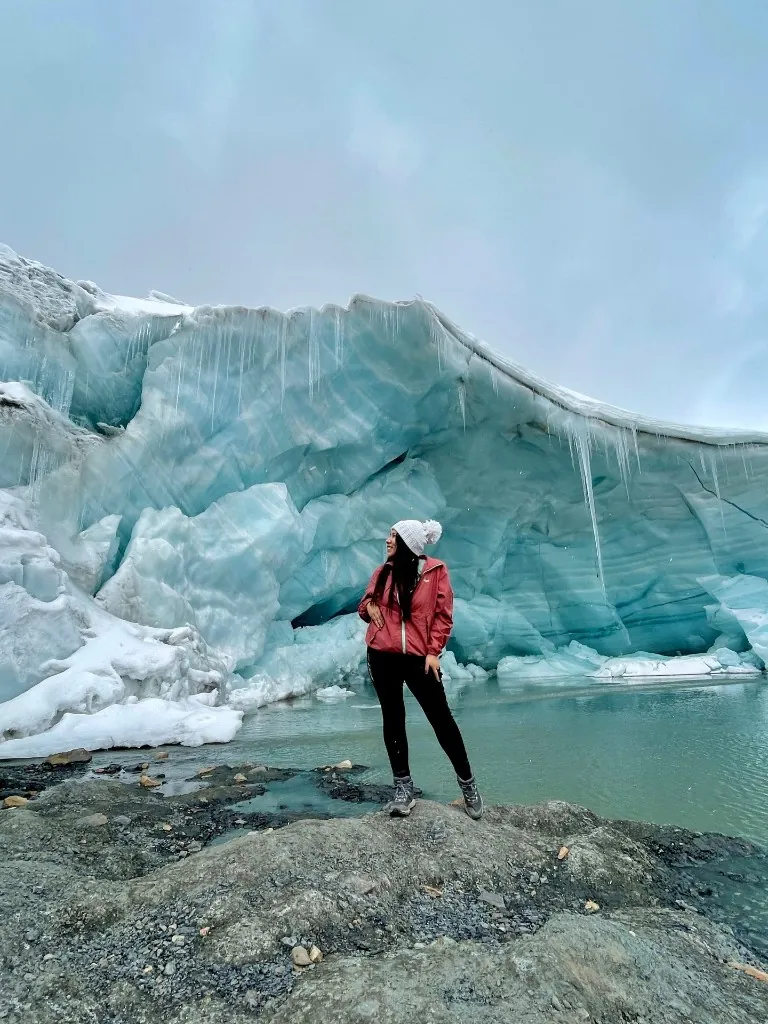
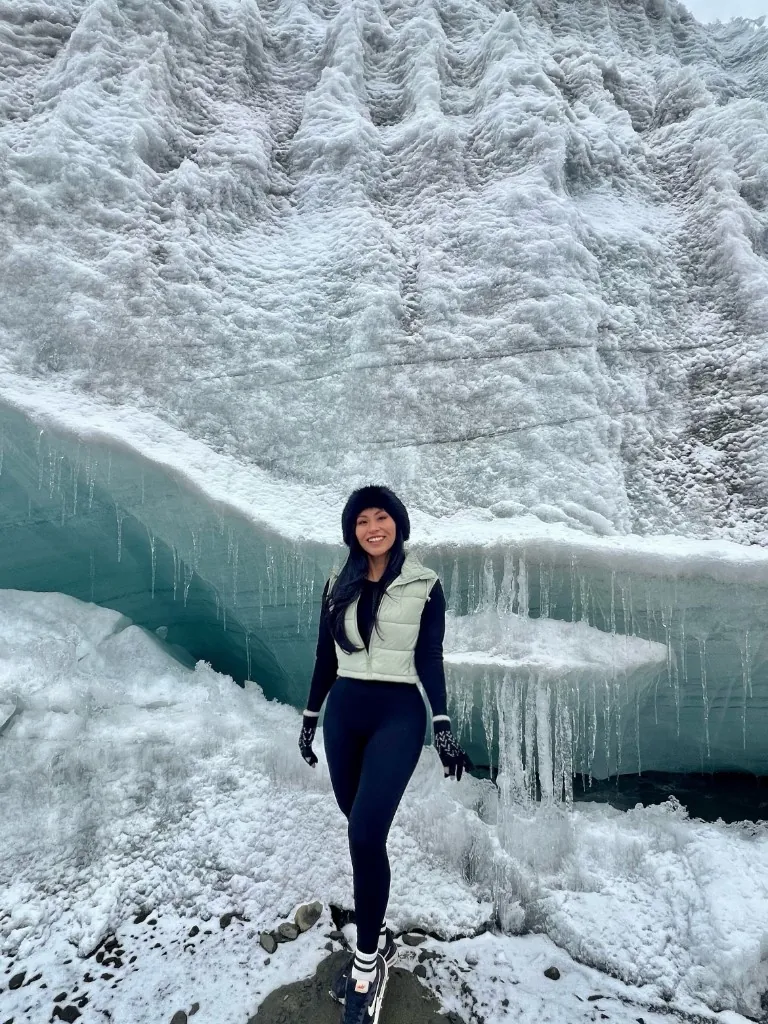
The Quelccaya Glacier Full-Day Tour is our full-day excursion from Cusco to the Quelccaya glacier, in the Vilcanota range, between Canchis province (Cusco) and Carabaya province (Puno). Considered until 2020 the largest tropical glacier in the world, Quelccaya holds more than 1,800 years of Andean climate history in its ice, is venerated as an Apu by the Quechua communities of Phinaya, Chimboya, and Quelccaya, and is today one of the clearest indicators of climate change in the tropical Andes. We pick you up before dawn in Cusco, have breakfast in Cusipata, and travel across the high plateau to the community of Phinaya and the Puerto Cáliz sector (Suyuparina), from where a short walk takes us to the glacier front, above 5,000 m a.s.l. Afterward we have lunch in Phinaya, visit Sibinacocha lake, and return to Cusco at night. We include tourist transport, a bilingual professional guide, breakfast, lunch, and a first-aid kit.
-
Best time to travel Approx. May to September or October (dry season)
-
Maximum altitude Above 5,000 m a.s.l. (glacier front)
-
Physical difficulty Short walk; extreme altitude
-
Minimum number of passengers 2 adults
-
Maximum number of passengers 10 adults
-
Booking lead time 1 day in advance
Overview
- Approx. 3:00 a.m. – Pickup in Cusco: we collect you at your hotel in the historic center and travel south.
- Approx. 5:00 a.m. – Breakfast in Cusipata: buffet breakfast after about two hours on the road.
- Morning – Toward Phinaya: drive through Pitumarca and the high plateau of the Vilcanota range to the community of Phinaya (approx. 4,715 m a.s.l.).
- Approx. 9:00 – 10:00 a.m. – Puerto Cáliz (Suyuparina): arrival at the glacier access point and a short walk to the ice front.
- Quelccaya glacier: about an hour and a half to explore, listen to our guide, and take photographs.
- Approx. 12:30 p.m. – Lunch in Phinaya: a typical lunch with local ingredients.
- Afternoon – Sibinacocha lake: a scenic stop at this large high-Andean lake.
- Approx. 8:00 p.m. – Arrival in Cusco: the service ends in the city center.
Itinerary
Approx. 3:00 a.m. – Pickup in Cusco and breakfast in Cusipata
We start very early: we pick you up at your hotel in the historic center of Cusco around 3:00 a.m. (we confirm the exact time the day before; if your hotel is far from the center, we meet at a central meeting point) and travel in our tourist transport toward the south of the region.
After about two hours on the road we reach the town of Cusipata, where we have a buffet breakfast to recharge before continuing into the heart of the Vilcanota range.
Morning – Across the high plateau to Phinaya
After breakfast we continue along the Pitumarca route and enter the Vilcanota range, crossing high Andean communities, wide grasslands, and wetlands, where it is common to see alpacas, llamas, and wild vicuñas.
We reach Phinaya, a traditional high Andean community at about 4,715 m a.s.l. and the last settlement before the glacier. From here we continue about one more hour in our transport, climbing toward the Puerto Cáliz sector, also known as Suyuparina, one of the access points to the Quelccaya glacier.
Approx. 9:00 – 10:00 a.m. – Quelccaya glacier
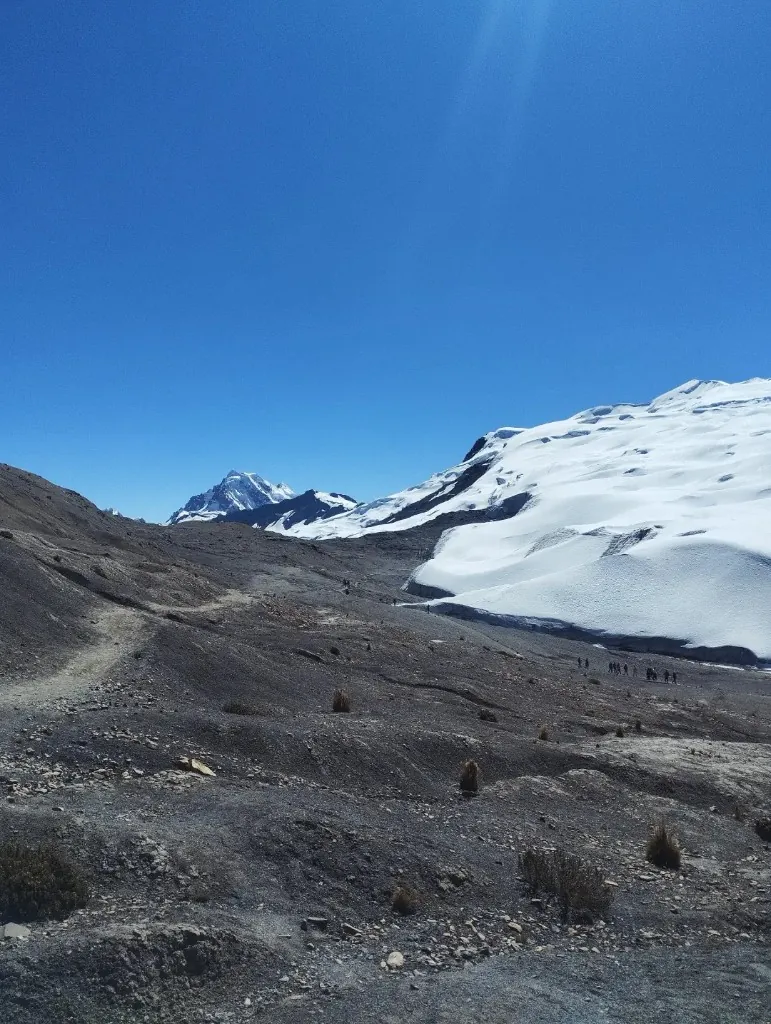
From the point where the road ends we start a short walk, about 10 to 30 minutes depending on the day’s conditions, to the glacier front, above 5,000 m a.s.l. Along the way we find streams, small glacial lakes, moraines, and, with luck, vicuñas. Although the walk is brief, the altitude means we move slowly.
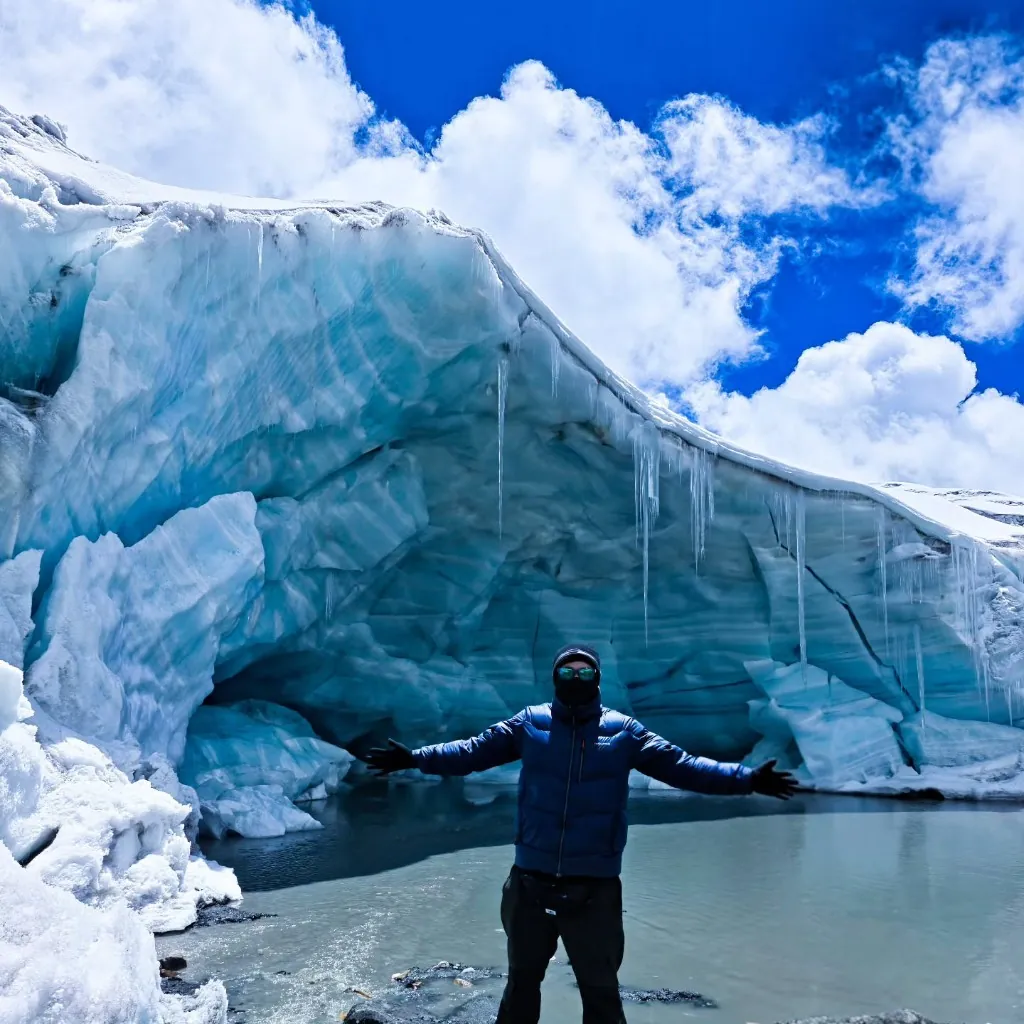
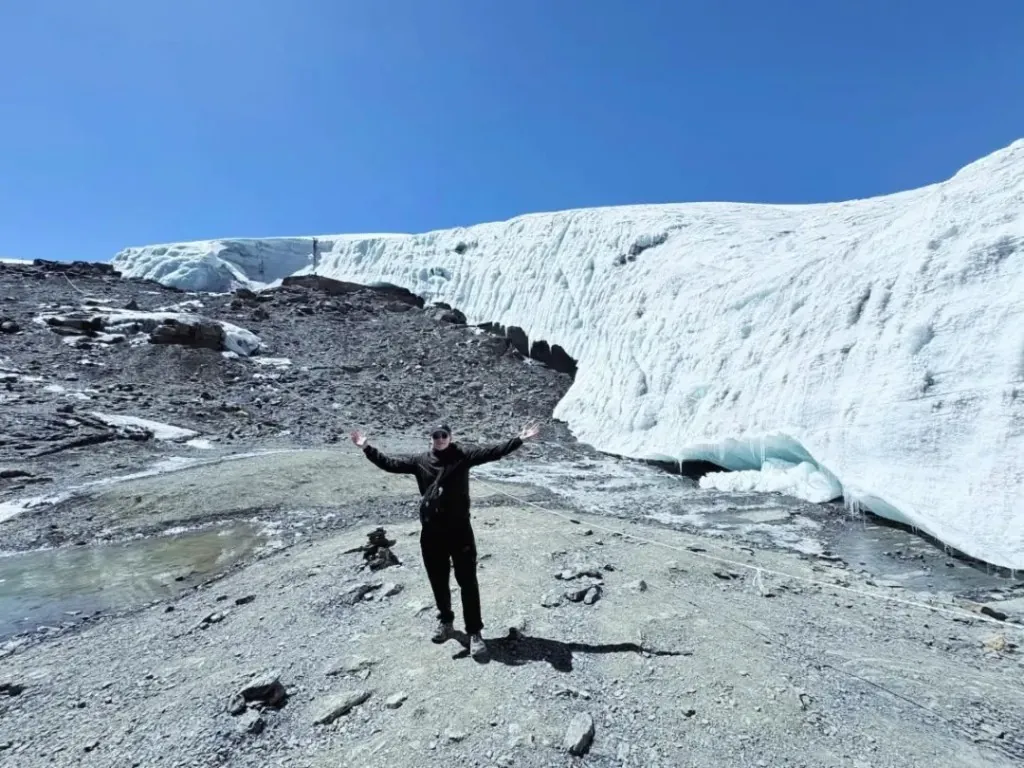
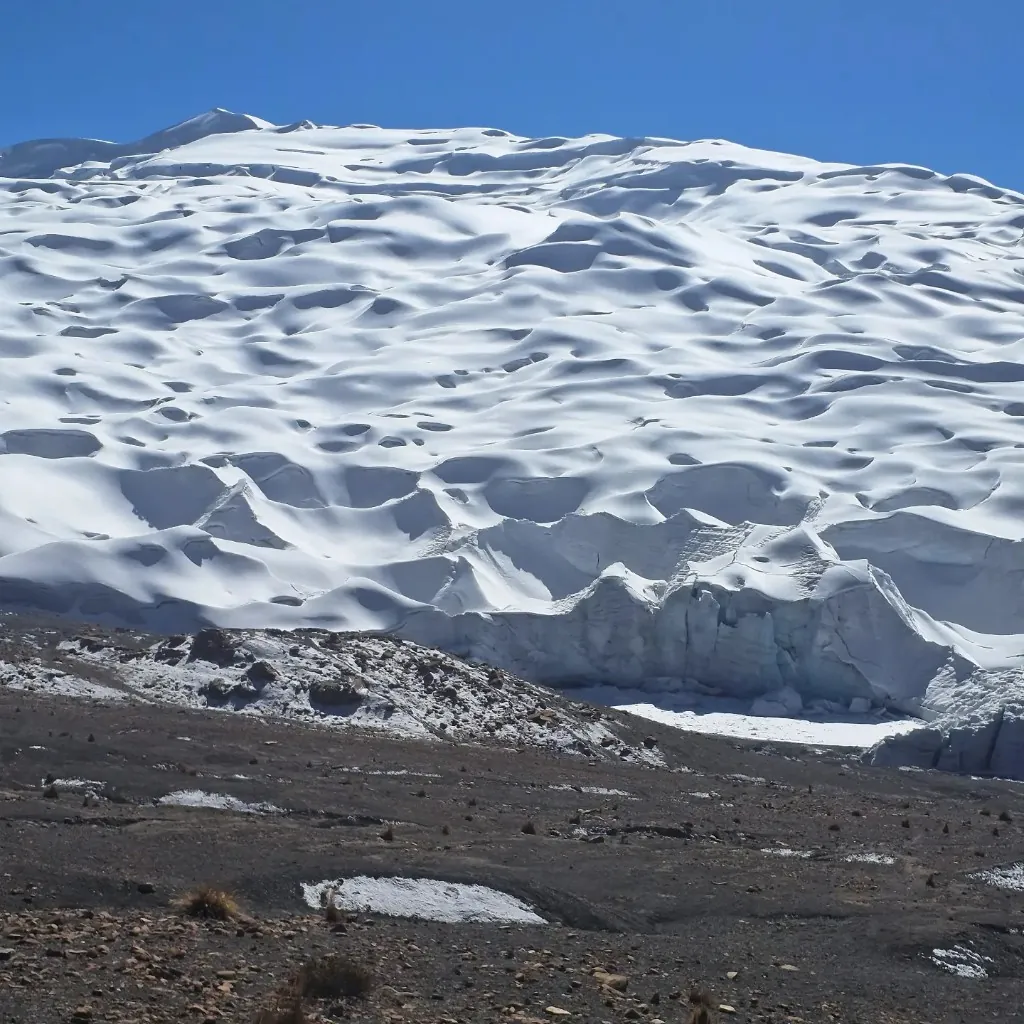
Facing the ice walls we have about an hour and a half to explore and take photographs, while our guide explains why Quelccaya matters: according to INAIGEM, it has lost 58% of its surface in the last 40 years (from 100 to 42 km²), it stores about 2,430 million cubic meters of water, equivalent to one hundred years of consumption for the city of Cusco, and it feeds the Vilcanota-Urubamba and Inambari basins. Its surroundings hold 56 plant species and 76 bird species, among them the white-winged diuca finch, the only bird in the world with scientific evidence of nesting on tropical glaciers. In 2024 the implementation of the Quelccaya Glacier Geopark was declared of national interest (Law No. 32131).
Approx. 12:30 p.m. – Lunch in Phinaya
When the visit ends, we walk back to our transport and descend to the community of Phinaya.
There we enjoy a typical lunch prepared with local ingredients and rest before continuing the route.
Afternoon – Sibinacocha lake and return to Cusco
In the afternoon we make a scenic stop at Sibinacocha lake, a large high-Andean lake fed by meltwater, with turquoise water and surrounded by snow peaks. You have time for photographs and to watch water birds such as the Andean goose and herds of alpacas.
We then start the return drive and reach the city of Cusco at about 8:00 p.m., where we end the service in the city center. Times can vary with the weather and the condition of the road, especially in the rainy season.
Recommendations
General
- Wear warm clothing in layers (in the morning the temperature drops below 0 °C), a waterproof jacket, a hat, gloves, and a scarf.
- Use sturdy trekking shoes with good grip, and thermal socks.
- Protect yourself from the sun with high-factor sunscreen and UV sunglasses.
- Carry a small backpack with water, energy snacks, your personal medication, and your camera or phone with a charged battery.
- Have your passport or original ID handy; it is needed to register at community checkpoints.
- Bring cash (soles) for the community entrance fee and personal expenses.
- Respect the natural surroundings and the local communities.
Acclimatization
- The glacier sector is above 5,000 m a.s.l. and Phinaya is at about 4,715 m a.s.l.: we recommend spending at least 1 or 2 days (ideally 2) in Cusco before the tour to acclimatize.
- Avoid alcohol the day before and heavy meals.
- Drink coca tea to help prevent altitude sickness and stay well hydrated.
- Walk slowly and calmly on the glacier stretch.
- If your doctor recommends it, bring altitude medication.
Inclusions
Included
- Pickup from your hotel in the historic center of Cusco (or the indicated meeting point).
- Tourist transport out and back.
- Bilingual professional guide (Spanish / English).
- First-aid kit.
- Buffet breakfast in Cusipata.
- Typical lunch in Phinaya.
Not included
- Community entrance ticket to the Quelccaya glacier.
- Dinner.
- Additional drinks, snacks, and meals not mentioned.
- Personal expenses.
- Tips.
- Travel insurance.
Frequently asked questions
Where is the Quelccaya glacier?
In the Vilcanota range, southeast of Cusco, between Canchis province (Cusco) and Carabaya province (Puno). This tour approaches through the community of Phinaya, in the district of Pitumarca, to the Puerto Cáliz or Suyuparina sector. It is also known as the Quelccaya Ice Cap or Ice Field.
Is it the largest tropical glacier in the world?
It was considered so until 2020; because of its rapid retreat, some sources now place it second, after Coropuna. It remains the most studied tropical ice mass on the planet.
How much walking is there?
Little: from the point where the road ends, a short walk of about 10 to 30 minutes to the glacier front, and back the same way. The demand is the altitude, not the distance.
How high do we go?
Phinaya is at about 4,715 m a.s.l. and the glacier sector we visit is above 5,000 m a.s.l. (around 5,200 m at Suyuparina, according to local operators). The summit of the ice cap reaches about 5,650 m a.s.l.
How long is the tour?
It is a full day of about 17 hours: we leave around 3:00 a.m. and return to Cusco at about 8:00 p.m. The outbound drive takes about five to six hours.
What happens in bad weather?
High-mountain weather changes quickly. If a heavy snowfall covers the road and access is not safe, we put the group’s safety first and arrange a change of date or route.
What is the best time to go?
The dry season, roughly May to September or October, with clear skies and better visibility. From November to March the landscape is greener, but travel times can stretch because of the condition of the road.
Are there restrooms on the route?
Facilities are limited and basic, generally available in communities such as Phinaya.